Curatorial Space
- 28th March - 25th April 2026
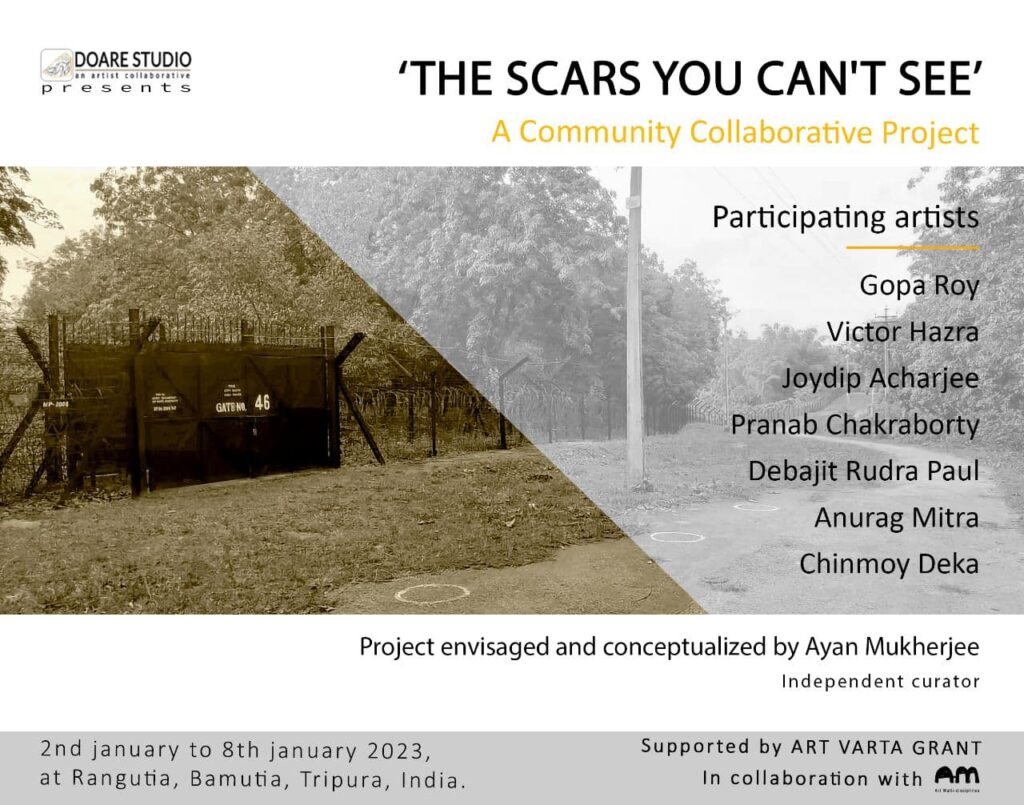
The body remains while the soul perishes somewhere in an infinite digital space, wandering in search of its real-life identity and essence. Like spirits that speak, eat, hear, sleep, and dress but somehow fail to breathe in the earthly, physical realm.
We breathe each moment in person, in private. Yet, in the context of current times, do we truly live and expand with the air we organically produce? Or are we now defined by the airwaves and technological spaces we inhabit? When the expressions of time evolve, do our natural voices metamorphose into machine-oriented, technologically instrumented echoes?
- 7th - 21st January 2026
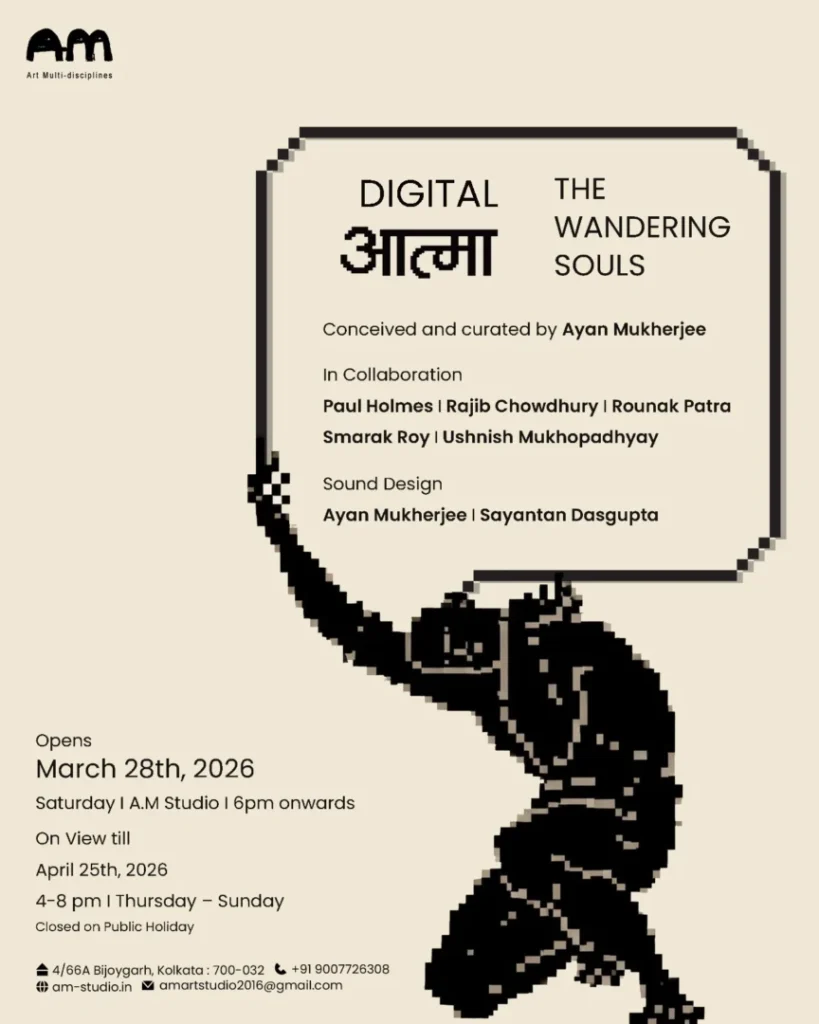
This collaboration begins from looking, slowly, repeatedly, and from staying with the work long enough for it to speak back. Debarati Roy Saha’s paintings do not announce themselves. They arrive through fragments, through pauses, through moments that hover between clarity and erosion. What surfaces is not a story, but a state of being with memory as it shifts, settles, resists.
Her practice moves through a continuous play of presence and absence. Images appear, retreat, blur, and return…sometimes insistently, sometimes shyly…occupying spaces that feel uncertain yet familiar. There is a measured distance at work, and also an intimate closeness. A tension between revealing and withholding. Colours, and their manner of application, act as carriers of emotion, but also as shelters, holding what cannot always be spoken or blatantly revealed.
- 16th May 2025
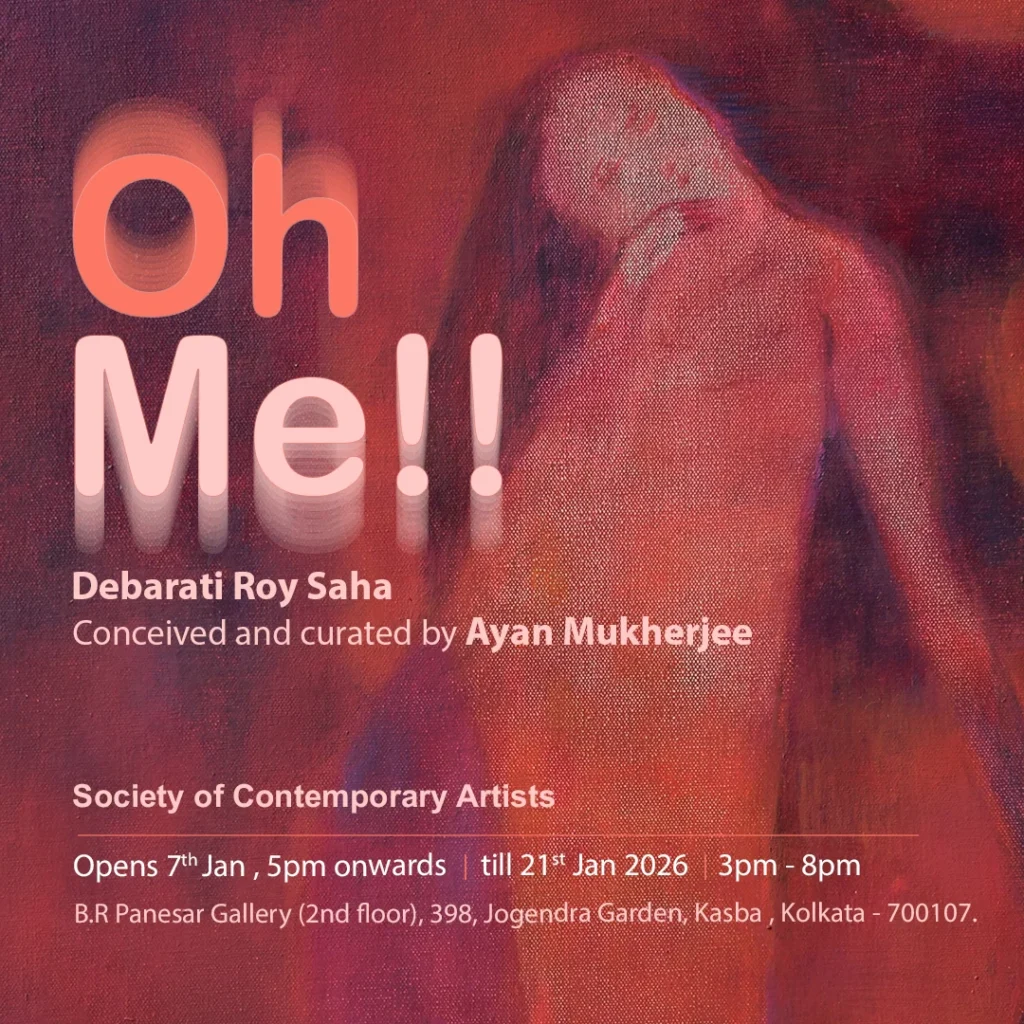
In the dim glow of introspection, I find myself quietly asking: “Who made who?” This question echoes through the inward corridors of my mind, reverberating against each breath that I hear. WHO MADE WHO is a project born of that very question, a search—an exploration of the inner conflict and harmony, the struggle and peace, the layers of psychic spaces, identity, and the concealed dialogues we carry within ourselves. The shape of our lives—how we sketch our days, design our being, carve choices from chaos, imagine outcomes into existence. The dreams we hold of peace, the visions of solace, the fragile translations of what we believe might become satisfaction. Our judgments, our misjudgements, the certainties we cling to, the chances we miss—each one a silent tremor, a storm in waiting. All of it rumbling through the mind, with a force that stirs and a silence that folds. How we coronate the self, again and again—to imagine and reimagine who we are, and how we become who we are, or something still becoming.
- 16th March 2025
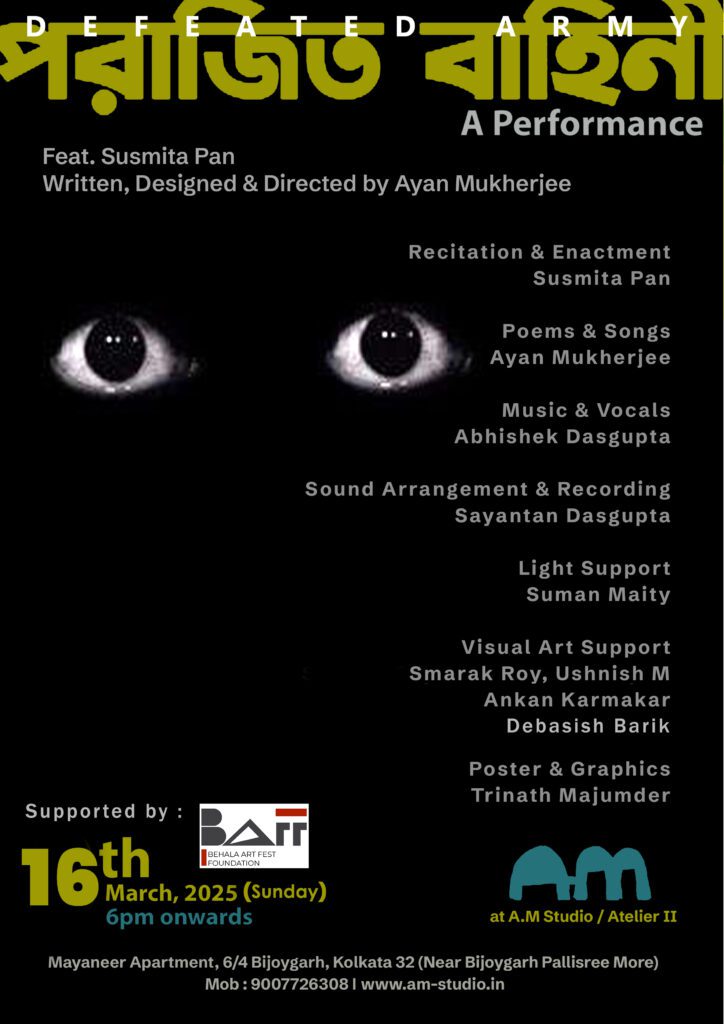
From abandoned corners of time, they rise—
Our defeated army. /
আমাদের পরাজিত বাহিনীরা।
But who are they? /
ওরা কারা?
Not warriors with swords or shields,
But fragments of our past— /
আমাদের জাপনচিত্রের নির্বাসিত টুকরো হয়তো,
The marooned moments, the breaths we left behind. /
যে নিঃশ্বাসগুলো আমরা কোনো এক সময় ফেলতাম।
- 20th December – 22nd December 2024
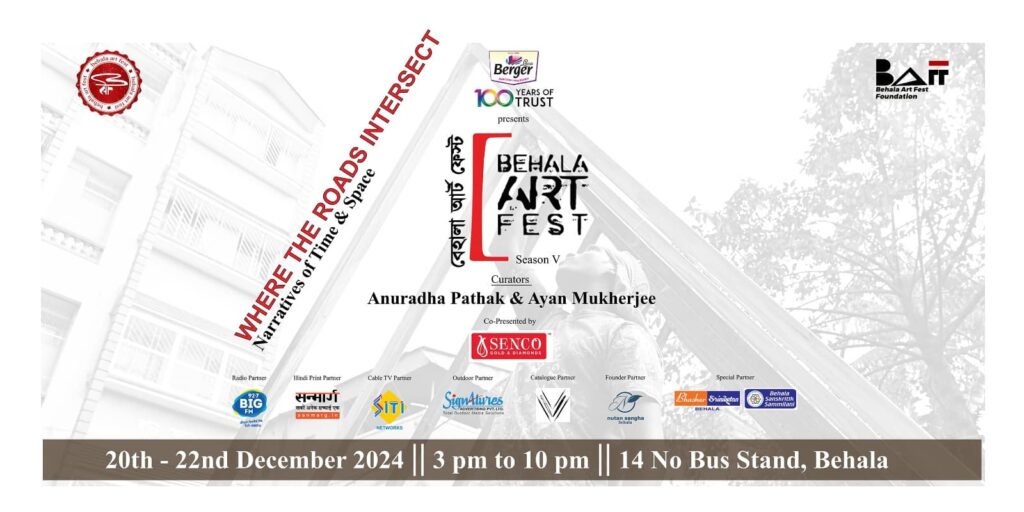
Times that Spoke/Times that speak
সময়ের স্রোত ও জীবন প্রবাহ
The times left behind in the course of life breathe in the form of our memories; they may profoundly help develop and formulate our present, educate us, help us build notions and judgments, formulate philosophies, create experiences, and push us to understand and realize ‘life’ as a ‘continuing practice.’.
Various living/non-living entities and objects that were integral parts of our lives yesterday shift and often get redesigned circumstantially. The abandoned spaces of our lives, an old friend who gave time and taught us the meaning of friendship, the ancient house that saw us grow, a book that provided vitamins for life, an old song that drew the shape of our hearts, the dress we loved wearing so much, a food preparation by the mother, an incident that gifted us experience of a lifetime, the diary that recorded the lines of our soul, may turn out to be a few of many that cry out loud, not like vampires but like an ex-lover, and the blotted-out lines that are the anecdotes of our lives and times. They carry and contain our memories, reciting our life logs, and thus often turn into memory containers. They are the crucial elements and spaces behind the evolution of our beings.
Ayan Mukherjee
- 9th August – 7th September 2024
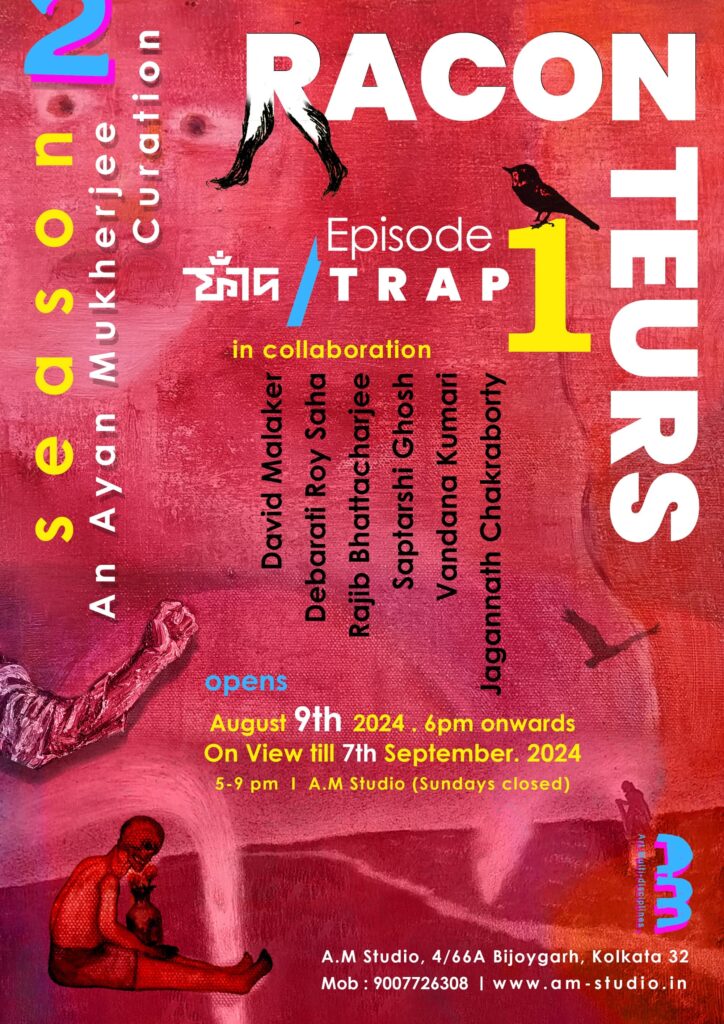
SOCIETY, indeed a crazy breed, as we hike along with a massive dearth of contentment, liabilities, and sensibilities and make inroads into the deep craters of hollows.
The bully of the hour may well be our boundless appetite and craving, which dismiss terms like necessity and requirement; the lusty character often culminates in a plethora of misjudgements and sequences of missed chances, making us human beings mere dolls in a puppet show performing in the hands of their merciless masters. So who’s the master? May be a second self we have given birth to??
It’s indeed ironic how we have steadily transformed ourselves into breathing products of materiality and surface, one ponders.
Isn’t it funny how this disguised second self in us, made of greed, savagery, disregard, and perhaps egotistical forms of existence, persistently darkens our mind, heart, brain, and even body? Do we open introspective spaces to extensively realise this?? Do we try to construct sovereign roads to subjugate the issue?? Or do we repeatedly get controlled by this delusional self??
One feels that the stunts and glitters of time absorb us beyond the realms of practicality. Would it be appropriate to refer to ourselves as independent?
Somehow, we comfortably oversee the fulfilments on hand. In the process, do we show ignorance towards weaving the moral fabric that ‘WE’ as a society need? Missing out on bonding with broader spaces like freedom, solace, introspection, and perhaps more such spaces?? Can we righteously identify our necessities and requirements??
Adhering to these self-inventive times, decimating principles, ideologies, and simplicity, are we convicts of this brawl between necessity and luxury that inwardly drains us, making us lonely and miserable breeds of souls?? It feels as if rationality and wisdom of thought, along with the nourishment of our judgements, have long been on trial.
One contemplates that ‘Life’ is a fabric we have collectively voiced and woven.
And in that case, the question that often invades my mind is:
Are we resolutely part of the fabric??
Or
Are we trapped by the fabric??
- 27nd April– 18th May 2024
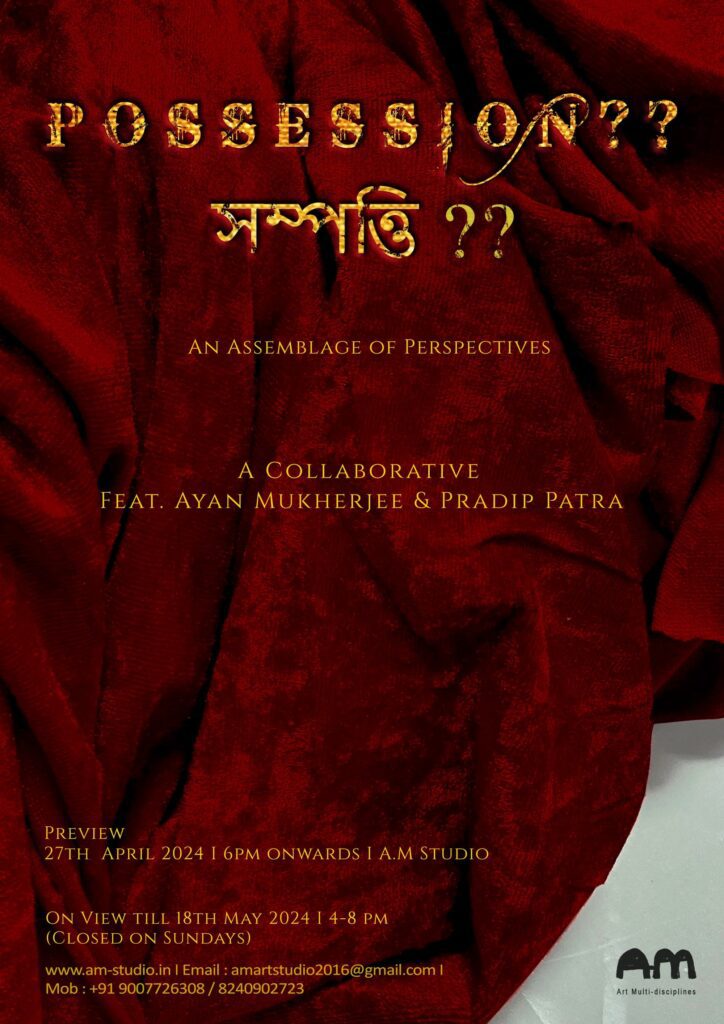
How does it prescribe itself?
How do ‘WE’ interpret it?
How well does it penetrate into our insights?
Is it definite or an ambiguity??
Is it consistent or transitory??
Is it our wealth or a burden??
Is it tangible, or is it our fantasy??
Do we breathe life into it??
Do we amplify it??
In what form does it survive??
life? death? identity? illusion? need? want? love? lust? anxiety? futility?
Trying to roll the ball hemming and hawing for a million years in the midst of persuasion, chaos, satisfaction, contentment, misery, turmoil, greed, triggered by glory, and trapped by the delusion, the quest seems to collapse every time.
The search streets often persuade us to consume all the hollows and pathos on the way and etch the irony of it all onto the fabric.
How well do we explore the conditioned alter self that presides over our minds, looking for triumph and rallying on, unfazed?
How well do we know ourselves?? Our psyche?? Our body?? Our breath??
Do we possess??
Are we possessed??
- 22nd Sept – 15th Oct 2023
Figure Study in Light by Paul Holmes
I’ve always been fascinated by suits and tailoring. Skilled cutting of cloth can flatter the form and make an imperfect body seem well-proportioned. A good suit lends its wearer confidence and dignity, power even. The suit had its origins just over a hundred years ago in sporting fashion and the connection to the athletic ideal hasn’t entirely been lost.
I’m also interested in the way in which we are identified by others – often the state or large corporations – as unique individuals. These identities are articulated and stored by these institutions in various forms – photographs and fingerprints, for instance, as well as facts about us, such as body weight, shape, and size: our vital statistics.
It is similar measurements that a tailor uses to create a suit of clothes, and it is these figures that I have converted into lengths of glowing LED tubing. This seemed to me an intriguing basis to create some kind of schematic evocation of the human figure, akin to a child’s line-drawing or graphic signage. In this form the body seems almost skeletal – quite unlike the enhanced figure created by the tailoring itself.
My work is preoccupied with our bodies: Their actions and gestures, their impact on the world, and their gradual deterioration over time. Often this is through video art, installed on large CRT monitors that make the spectator engage with the work sculpturally by moving around it in space.

- 7th July – 31th July 2023
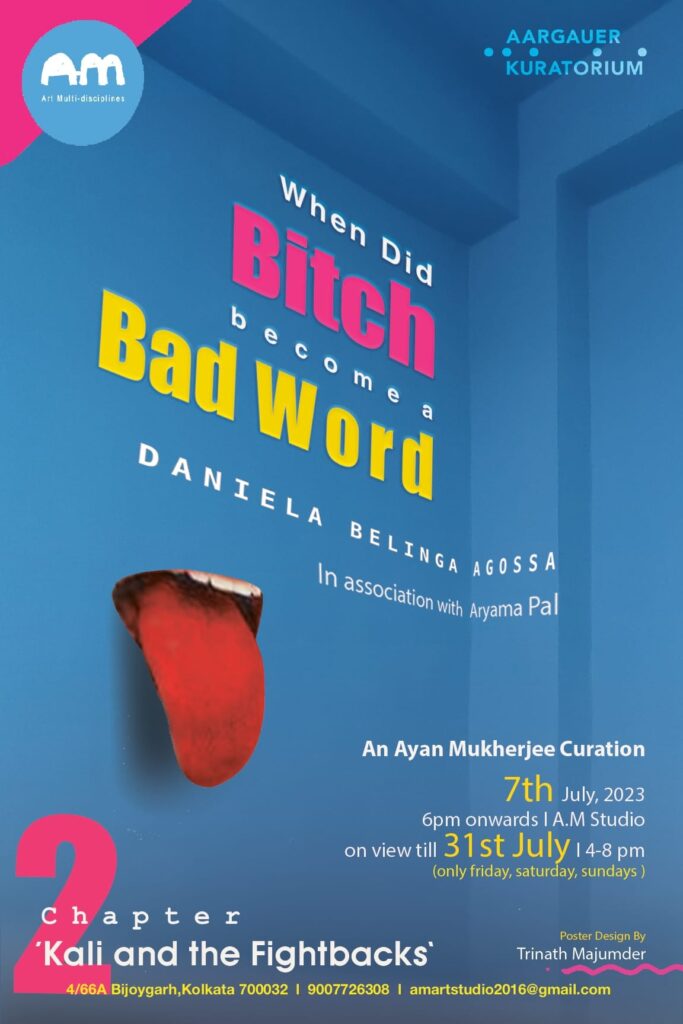
হোয়েন ডিড বিচ্ (Bitch) বিক্যাম এ ব্যাড ওয়ার্ড
দ্বিতীয় পর্ব
কালী অ্যান্ড দা ফাইটব্যাকস্
বিচ্ (Bitch) আদপেই একটি শালীন শব্দ
এই প্রজেক্ট আমাদের দৈনন্দিন আলাপ আলোচনা’র মধ্য দিয়ে বেড়ে উঠছিলো। প্রজেক্টের দ্বিতীয় অধ্যায়ে’র শুরুতে আমাদের যা ভাবনা ছিলো তার থেকে মূল ভাবনা’র অনেকটাই প্রসারণ ঘটেছে।আমি সাধারণত অত্যন্ত সজ্ঞালব্ধ ভাবে নিজের কাজ করে থাকি, কোন বিষয়ের ওপর আমার তাৎক্ষণিক’যে প্রতিক্রিয়া হয় সেটাই আমার শিল্পচর্চাকে এগিয়ে নিয়ে চলে।অয়ন মুখার্জি এবং আমি দুজনেই সিদ্ধান্ত নিলাম, এই প্রজেক্টের ক্ষেত্রে আমরা স্টুডিওর ভেতর এবং বাইরের সব দেওয়ালে রঙ নীল করবো (এই প্রজেক্টের প্রথম অধ্যায়ে আমরা দেওয়ালের রঙ গোলাপি (পিঙ্ক) করেছিলাম, কারণ মাতৃগর্ভে’র রঙ হল পিঙ্ক, আদপে পিঙ্ক হলএকটি নারীবাদী রঙ)।আমি ব্যক্তিগত ভাবে এই নীল রঙের জন্য অত্যন্ত খুশি কারন এটা বাংলার চিরন্তনী শ্যামা কালীর দেহের বর্ণ।
কালী’র বিষয় হিসাবে আমারা এখানে ছোট ছোট নরমুণ্ড এবং লাল জিভ রাখার সিদ্ধান্ত নিলাম। একই সাথে কালী আরাধনায় ব্যবহৃত নৈবেদ্য গুলো দিয়েই আমরা আমাদের দর্শকদের আপ্যায়নের সিদ্ধান্ত নিলাম। আমরা কালীর প্রাণশক্তি’র দ্বারা সকল অশুভ শক্তির বিনাশ ঘটিয়ে বিচ্ (bitch) শব্দটির প্রতি ন্যায্যতা প্রতিপাদন করে একটি শালীন শব্দে উপনীত করার প্রচেষ্টা করেছি।
- 29th April – 28th May 2023
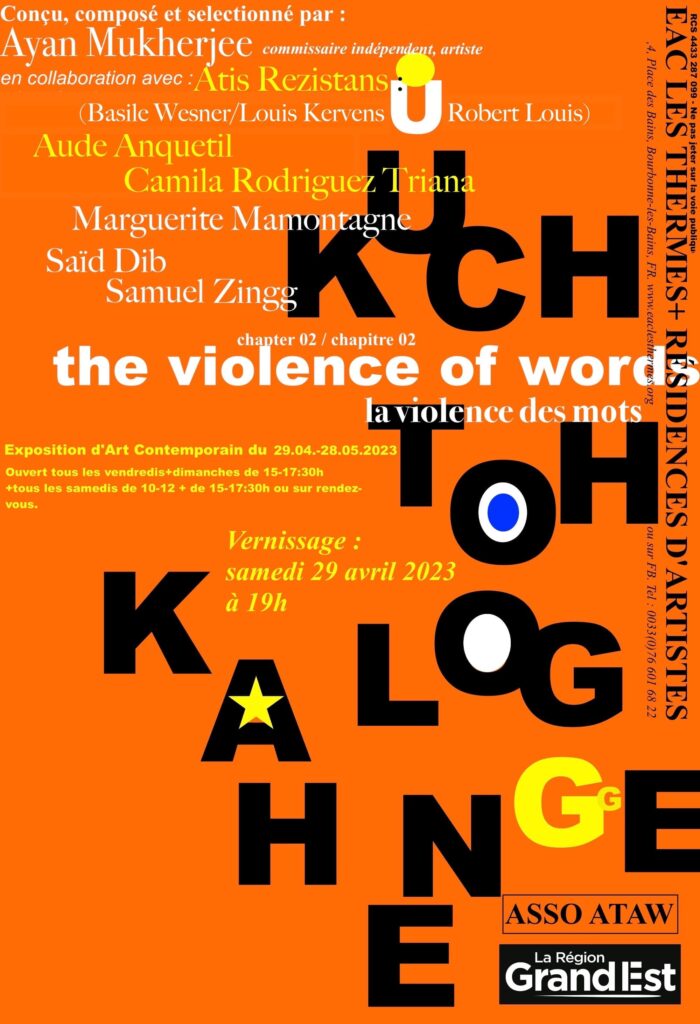
The times now are absurdly materialistic, incredibly swirling, and compromising. Arguably a significant culprit in this situation is the “words” coming out of our mouth with enormous freedom, but most of the time without self-discipline. Practicing to weigh our words before we release them is something we should strive to do before using this powerful weapon.
Words that were meant to connect and heal people, restore relationships, build up bonding, establish grace, and formulate beings are often used with extreme manipulation and disregard to the extent of being fabricated and often destructive. In the society of which I am a part (India), I have consistently experienced an act of mockery and juggling that is carried out persistently by a larger percentage of the population, flawlessly turning our state of being into a delicious circus. Every sphere of the social structure has a tendency to misinterpret the freedom of speech granted to us by the constitution for our own specific interests and needs. We seldom speak to create conversations; what we create is just ‘noise’. Fictitious statements, loose talks, grievous and unhygienic verbal spats, and discussions resulting in verbal violence have steadily infiltrated and become an integral part of our lifestyles and personas, and we have carelessly agreed and accepted this way.
Words being used as weapons of violence have long been legitimate in various spheres of our society, be they political, social, or personal. It is in no way new, and history may give us ample references to it.
- 11th Feb – 20th March 2023
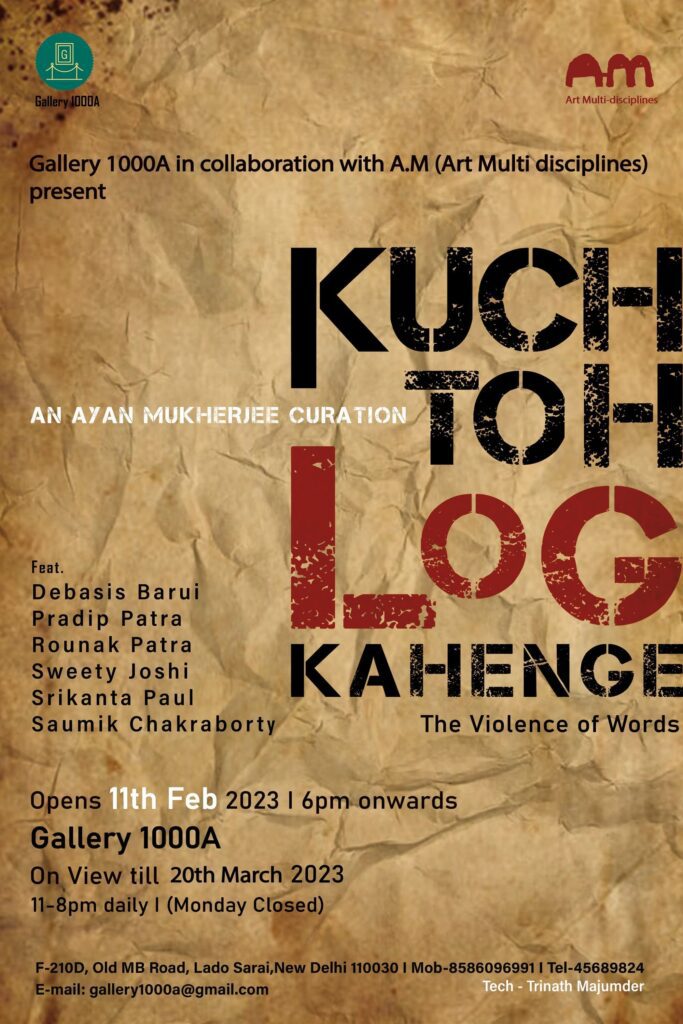
Times now, in the truest sense, are harshly materialistic and dishonestly compromising. Arguably the most significant culprit in this situation are the “words” coming out of our mouth with enormous freedom but brutal dishonesty.
Words that were originally meant to connect people, make relationships, create bonding, establish actuality, and formulate beings are often used with extreme manipulation to the extent of being fabricated and often destructive. An act of mockery and juggling that is carried out persistently by a superior percentage of the population flawlessly turns our state of being into a delicious circus. Every sphere of our social structure has a tendency to misinterpret the freedom of speech granted to us by the constitution for our own specific interests and needs. We seldom speak to create conversations; what we create is just ‘noise’. Fictitious statements, loose talks, and grievous and unhygienic verbal spats and discussions have steadily infiltrated and become an integral part of our lifestyles and personas. Unknowingly, we have stretched our arms towards becoming a breed of consciously provoked politicians who try hard to construct intolerable spaces, annihilating and disintegrating the holistic legitimacy of life. Words alone can now be the best weapon of violence.
It’s all about me rather than we the people, and us, the society.
- 2nd Jan – 8th Jan 2023
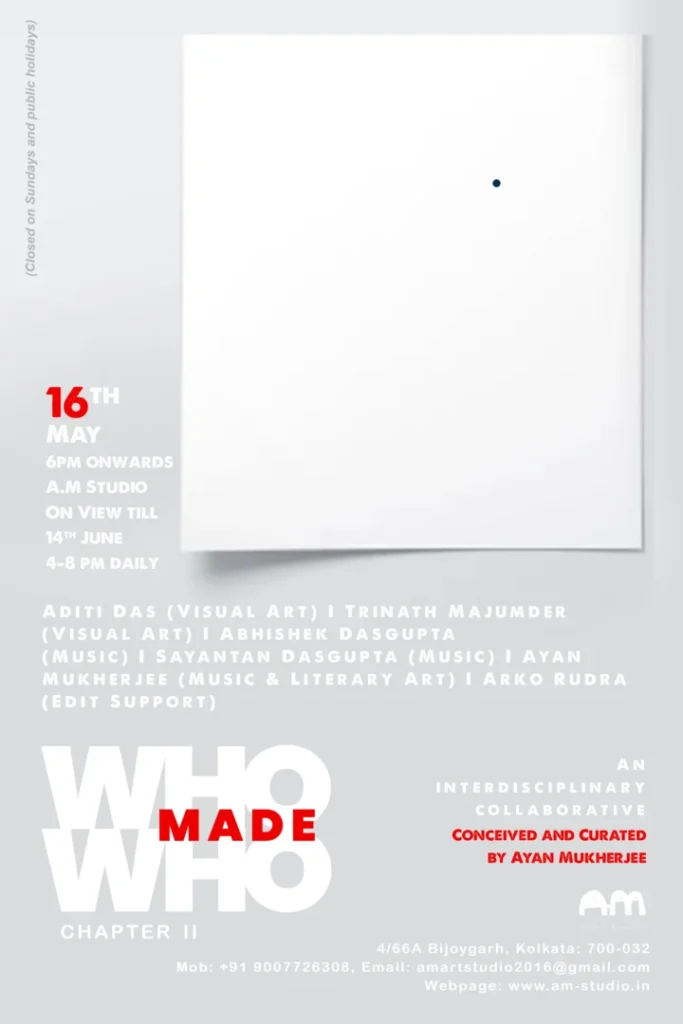
‘THE SCARS YOU CAN’T SEE’
A Community Collaborative Project
And I walked along the concrete road, crossing a BSF camp that heads towards the village of Rangutia in Bamutia, Tripura, and eventually reaching my destination. The space where I had come to explore and experience… As per plan, I would conceive a project of visual arts (outdoor) and curate the same, collaborating with a group of practicing contemporary artists originating from Tripura. Rangutia struck me as a small village made up of numerous mud houses and a few cement structures (which were new). A surreal environment with man-made forests all around… In the course of time, I discovered that it was one of India’s biggest rubber plantation sites, which was also the main source of livelihood for the villagers. I noticed this unconstructed road that leads into the forest to an unknown destination while wandering with the village and the villagers, listening to their daily acquisition of stories that made up their lives. I followed the path and walked ahead with a sudden sense of interest and tension. After reaching the end of the path, I discovered an endless curtain of barbed wire fences and gates, which were numbered. I realized it was where my country, India, ends and my neighboring country, Bangladesh, starts. It was the ‘BORDER’. I was stoned for some time, became emotional, and yet was unable to express myself… That moment, I was dealing with my own frustrations and misery. A ‘reality’ I couldn’t fathom from the time I was formally introduced to it initially by our educational system and later on more realistically through my own research and study about it….And the ‘reality’ was ‘PARTITION’..
The land named ‘INDIA’ was suddenly divided into two and eventually three separate land masses. The land was suddenly broken up into fragments. As the ‘intruders’ ordered and the ‘beholders’ accepted and followed. Because self-made politics and greed for power and authority would not absolve us of our sins, a society was not brave and independent enough to oppose the order…as we gladly assisted the intruders fulfill their wicked wish.